10 easy steps to make your own fermented tea at home
Don’t let the term “brew” scare you off—making your own kombucha is easy. The process is a bit nuanced, but it also leaves room for error and for getting creative with flavors. Making kombucha does, however, require some patience (i.e., waiting seven days for it to ferment). For those questioning why they should take the leap, the cost savings alone is a solid motivating factor, as well as the ability to control sweetness and a chance to experiment with herbs and flavor combinations. Fans of this delicious fermented drink will never want to go back to commercial brands again.
But first, there are some key points that must be followed to be a successful “booch” maker:
Use only black or green tea. Herbal teas harm the “scoby” (symbiotic culture of bacteria and yeast), also known as the “mother” culture. But flavoring can be added after the initial brewing process.
Use only glass jars for brewing and bottling; plastic leaches and metal doesn’t work well with the acidity that starts the brewing process.
Patience! When the recipe says keep the brew in a warm place undisturbed for a week, this matters. Once your brew is bottled (and if you can find a bit more patience) let it sit in the fridge for a few days. You’ll be rewarded with a smoother flavor.
This recipe requires a gallon-sized glass jar (recycled pickle jars work well) and single-serving glass bottles (I use recycled commercial kombucha bottles because I used to buy a lot of kombucha before I started making my own).
As for the scoby, there are many options online to find this gelatinous mother culture. If you can find a friend who is actively brewing, that’s best. If not, look for a culture that is golden in color (or a bit darker) and about 3 inches in diameter. Read reviews about the seller to determine who has healthy active cultures. (Check out this helpful link with photos of what good and bad cultures look like before you buy one: goo.gl/1FJVs6.)
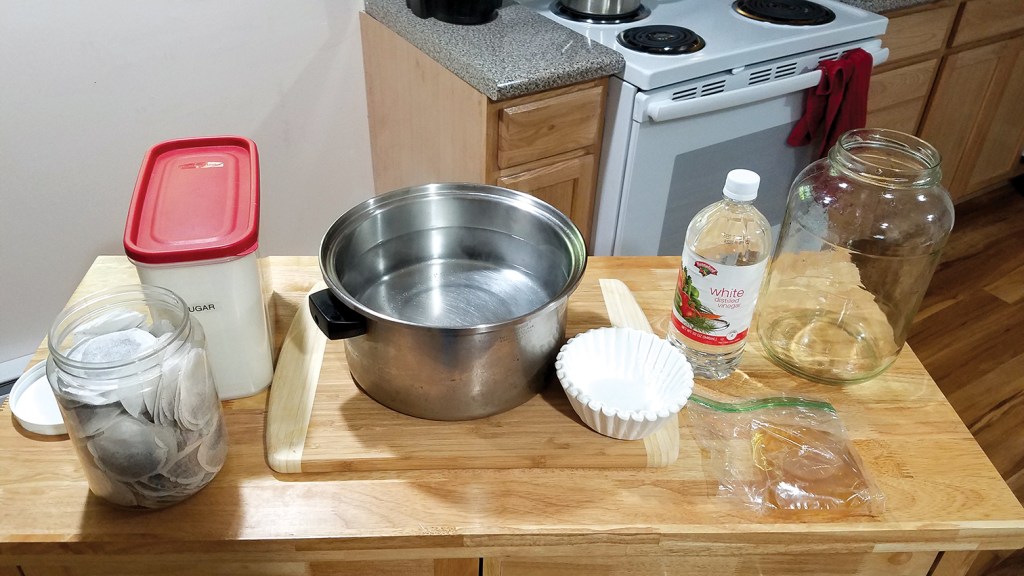
WHAT YOU’LL NEED
• 1 gallon glass jar
• 1 coffee filter
• 1 rubber band
• Large pot
• 10 tea bags, (black tea is best to get a new culture started)
• 1 cup sugar (no substitutes, although raw or refined sugar is fine)
• 1 gallon of water*
• 1/4 cup of white distilled vinegar (for first batch of a new scoby only)
• 1 scoby (symbiotic culture of bacteria and yeast) mother culture
*There are mixed reviews on using filtered or unfiltered water. I have used both tap water from our well and bottled water without issue.
STEP 1: Steep the tea bags.
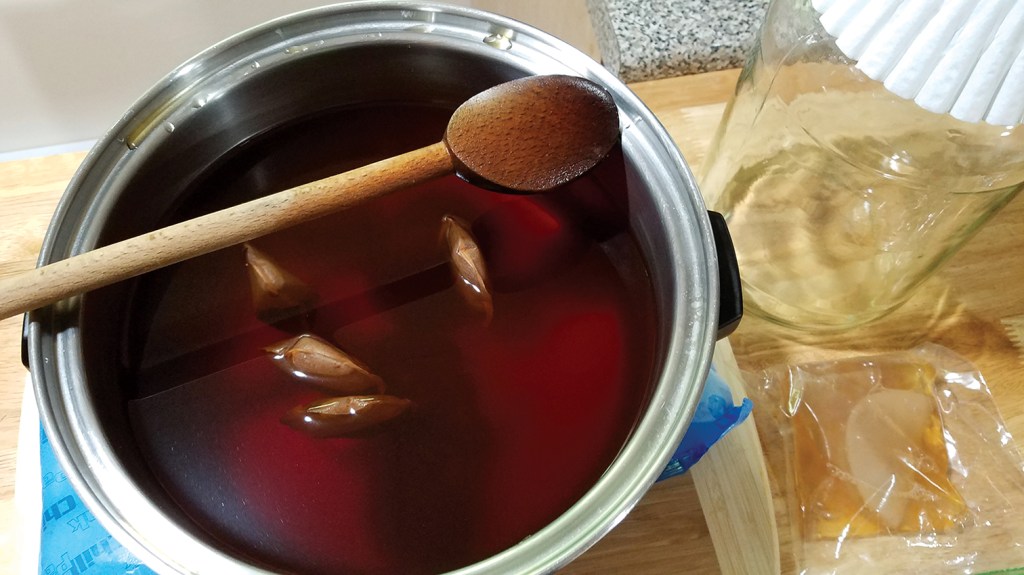
Boil the water in a large pot. Remove from heat and add the tea bags. Steep the tea bags for at least 10 minutes.
STEP 2: Add the sugar.
Once the tea has cooled (cool to the touch, add a couple of ice cubes to speed up this part), add the sugar and stir until dissolved. I wait until the tea is steeped to add the sugar so those tiny little bugs (they always seem to be around even when my kitchen is at it cleanest) aren’t attracted to sugary tea mixture. Also note that one cup of sugar seems like a lot, but the scoby needs all the sugar to ferment and very little is left when the brew is ready for bottling.
STEP 3
Put tea into the glass jar. Leave about an inch of headspace from the top to allow for the scoby and its starter liquid. Note: If your scoby only has 1/2 cup of liquid with? it, you’ll need? to add? 1/4 cup of vinegar to the first batch. This helps kick-start the culture.
STEP 4: Add the scoby.
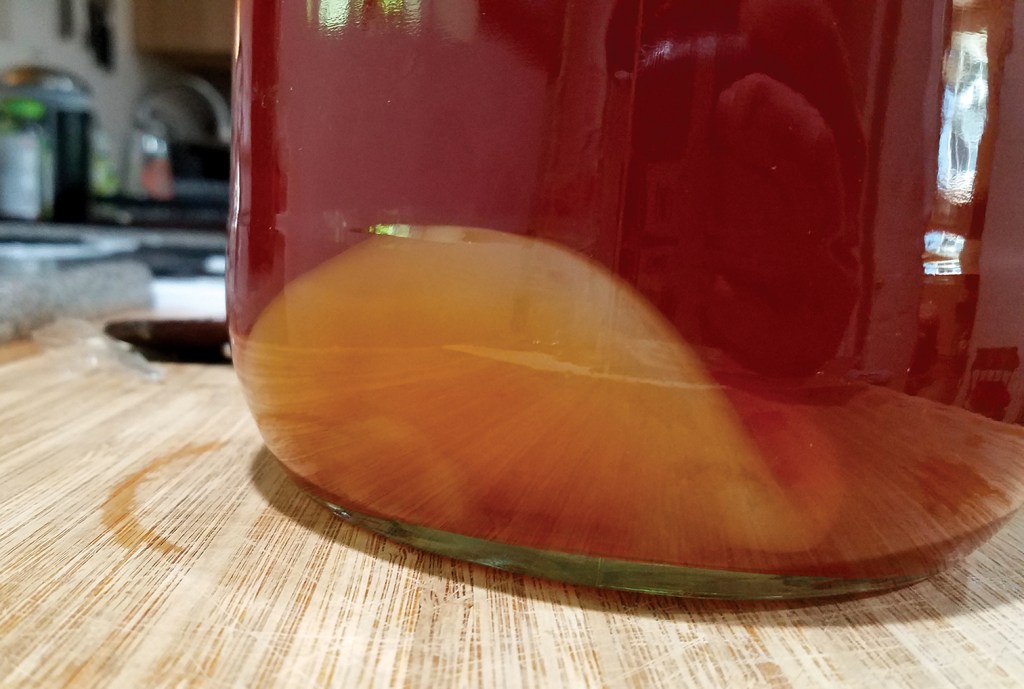
Check temperature of tea in jar to ensure it is about room temperature (too hot and it will kill the scoby). If the temperature is OK, add the scoby to the jar. Do not stir! Let it sink to the bottom and leave it alone. During the fermentation process it may float to the top or not. Either way is fine.
Note: A health scoby is about 3 inches in diameter and a light golden color.
STEP 5
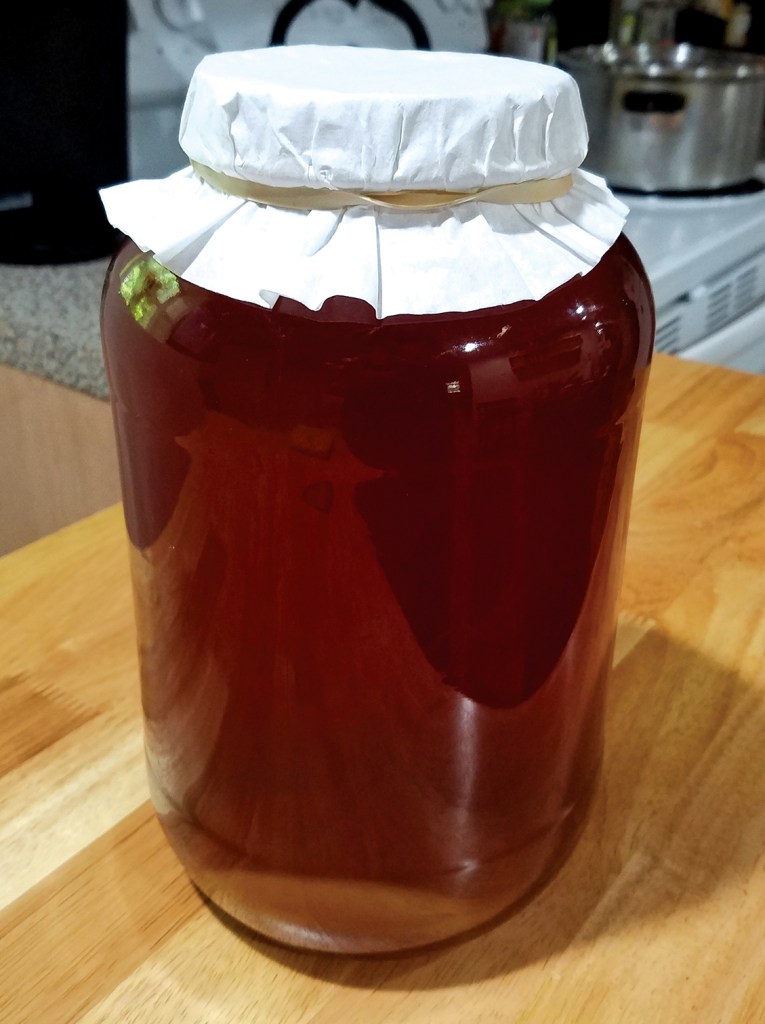
Carefully wipe the top of the jar so it is completely dry. Then put the coffee filter on top and secure with a rubber band.
STEP 6
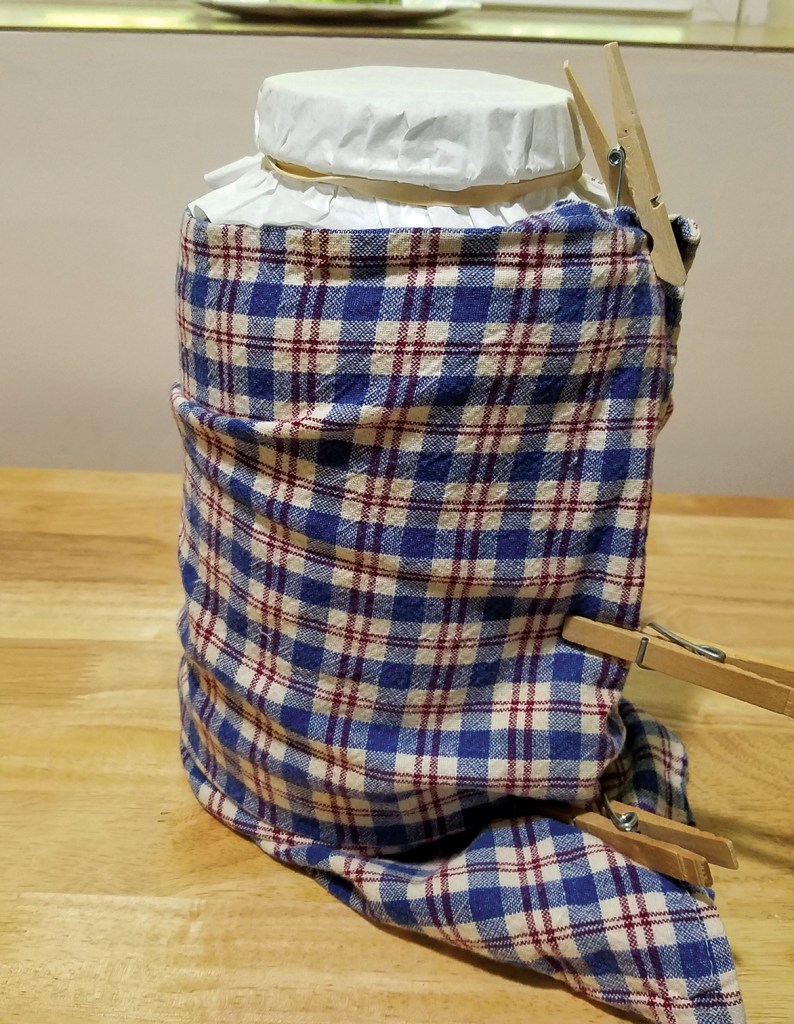
Put the jar in warm place for 6-7 days. I have tucked the jar into a dark corner of my kitchen counter but in the colder months, I put the jar on top of my dryer. I also wrap it in a dish towel. The scoby can be exposed to sun (but not directly) but the fermentation process works faster when the scoby is kept in the dark. The towel seems to maintain warmth as well.
STEP 7: Don’t move the jar.
Do not move the jar. This can not be stressed enough. If you leave the jar completely alone, a baby scoby has a chance to develop. A delicate white film on the top of the jar is an indication of a baby scoby, which means in another batch or two you can have two scobys to brew at a time.
STEP 8: Taste test.
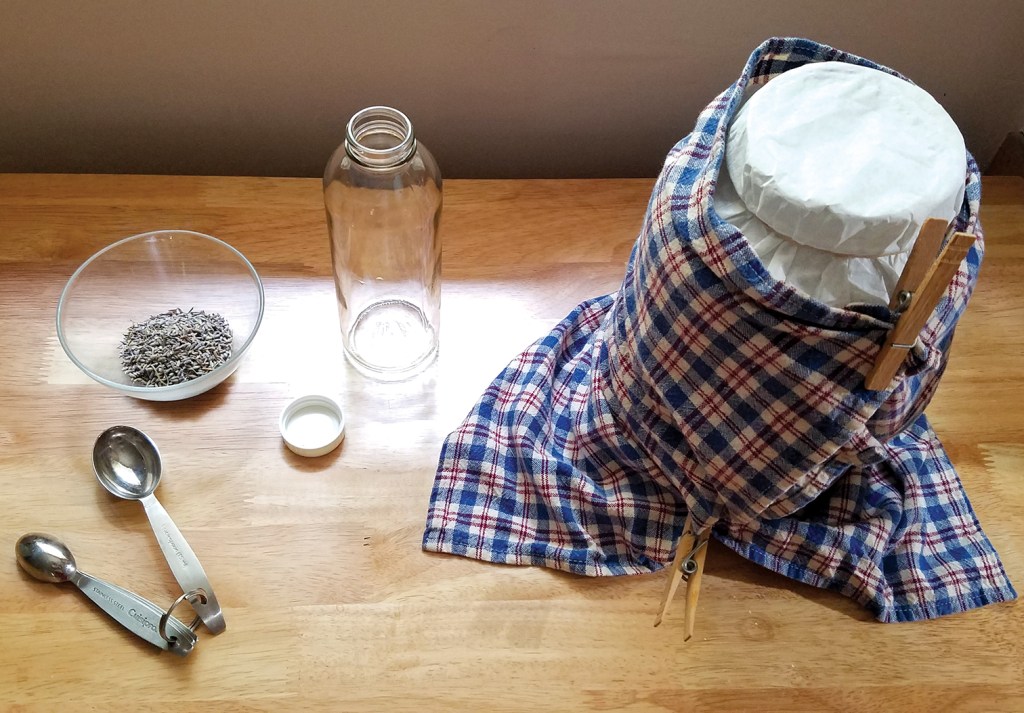
After 6 days, it is taste-test time. Dip a wooden spoon into the brew, being careful not to rip the white film that may form on the top (that’s the baby scoby). You’ll know the fermentation has done its job if the brew is more tangy than sweet. If you don’t think the taste is quite right, leave it alone for another day.
STEP 9: Time to bottle.
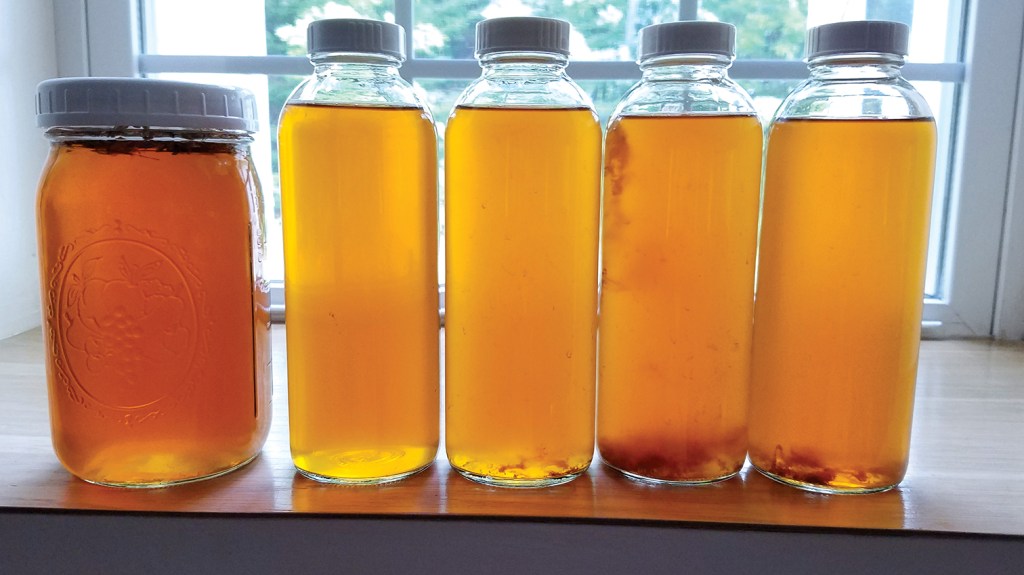
Once you’ve taste-tested the brew after 7 days and like the flavor, it’s time for bottling. Remove the scoby and put into a bowl along with 2 cups of the liquid and set aside (used for your next batch). Pour the remaining brew into single serving glass bottles and secure the plastic caps, and be sure to rinse all your bottles in hot water before bottling to ensure they are clean and free from any soap from their previous washing. Then refrigerate.
OPTIONAL: Add herbs.

Or, if you want to flavor your brew, you can add herbs. I like dried lavender or chamomile flowers, but you can choose whatever fresh or dried options you like. Once you add the herbs (1 tablespoon of dried herbs per quart), steep in the jar on the counter for another 24 hours with a plastic lid on top. Strain out the herbs and bottle into single serving jars and move to the fridge.
STEP 10
Enjoy a glass of homemade kombucha!
Wendy Almeida is a freelance writer from Standish.
This article was originally published in Maine Women’s Magazine Oct. 25, 2017.
 Kidtracks