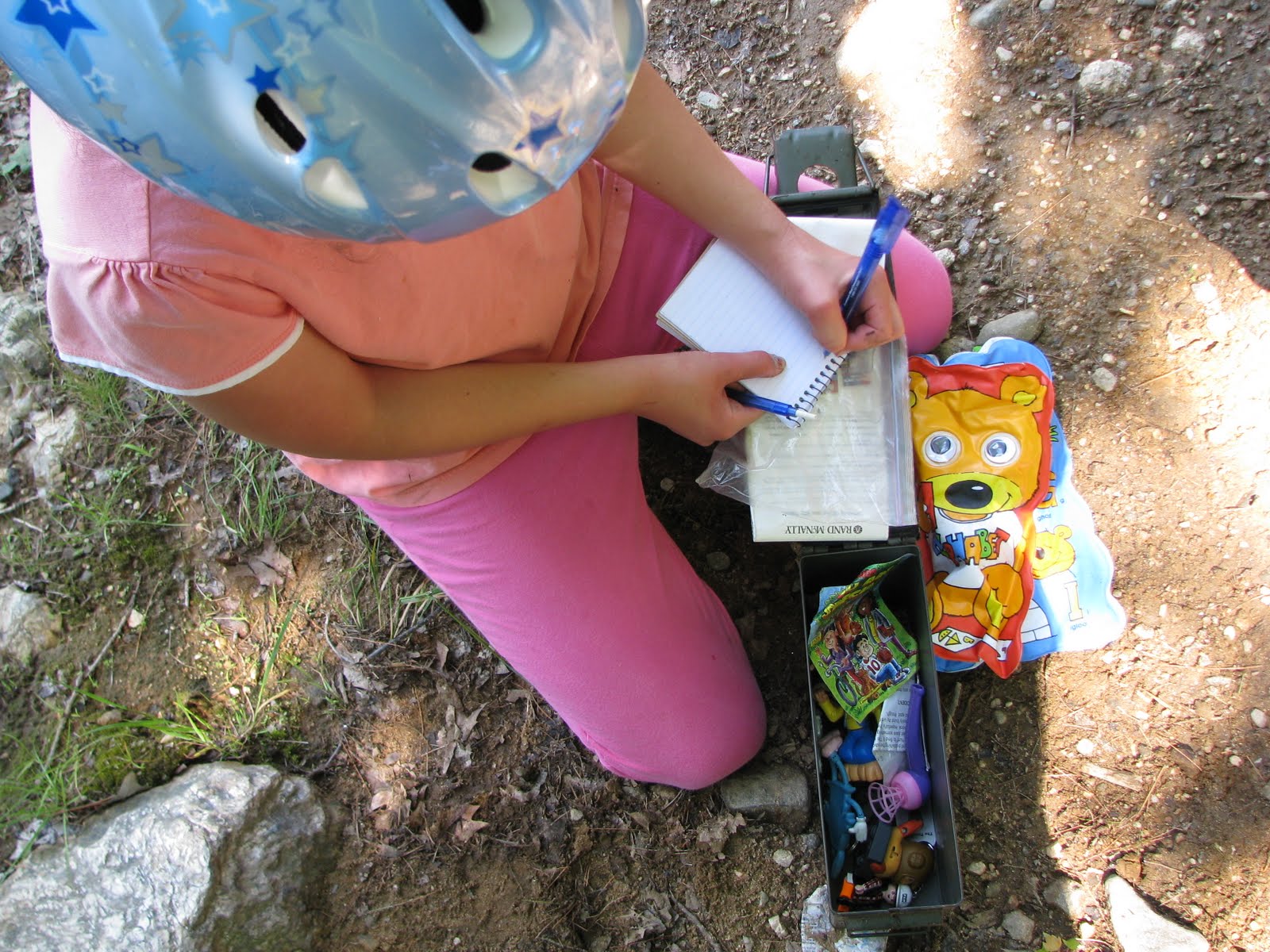
Geocaching is a high-tech treasure hunt using a handheld GPS (global positioning system) along with coordinates posted on geocaching.com to find the location of a hidden container.
We recently identified two “mystery” geocaches (with a difficulty rating of 4) along with some “micro” geocaches (with a rating of 3) to locate, and they proved to be good challenges for us.
Micro caches are tricky because, as the name suggests, they are small – hiding spots for them are endless. These types of caches can also be camouflaged in a way that requires a very keen eye to identify.
The micro cache we set out to find didn’t identify that it was camouflaged. After an extensive search around a stone wall, I put my hand on a stone and thought it didn’t feel quite right. After picking up the lighter looking stone and turning it over, I discovered the geocache glued in place on the fake rock’s underbelly.
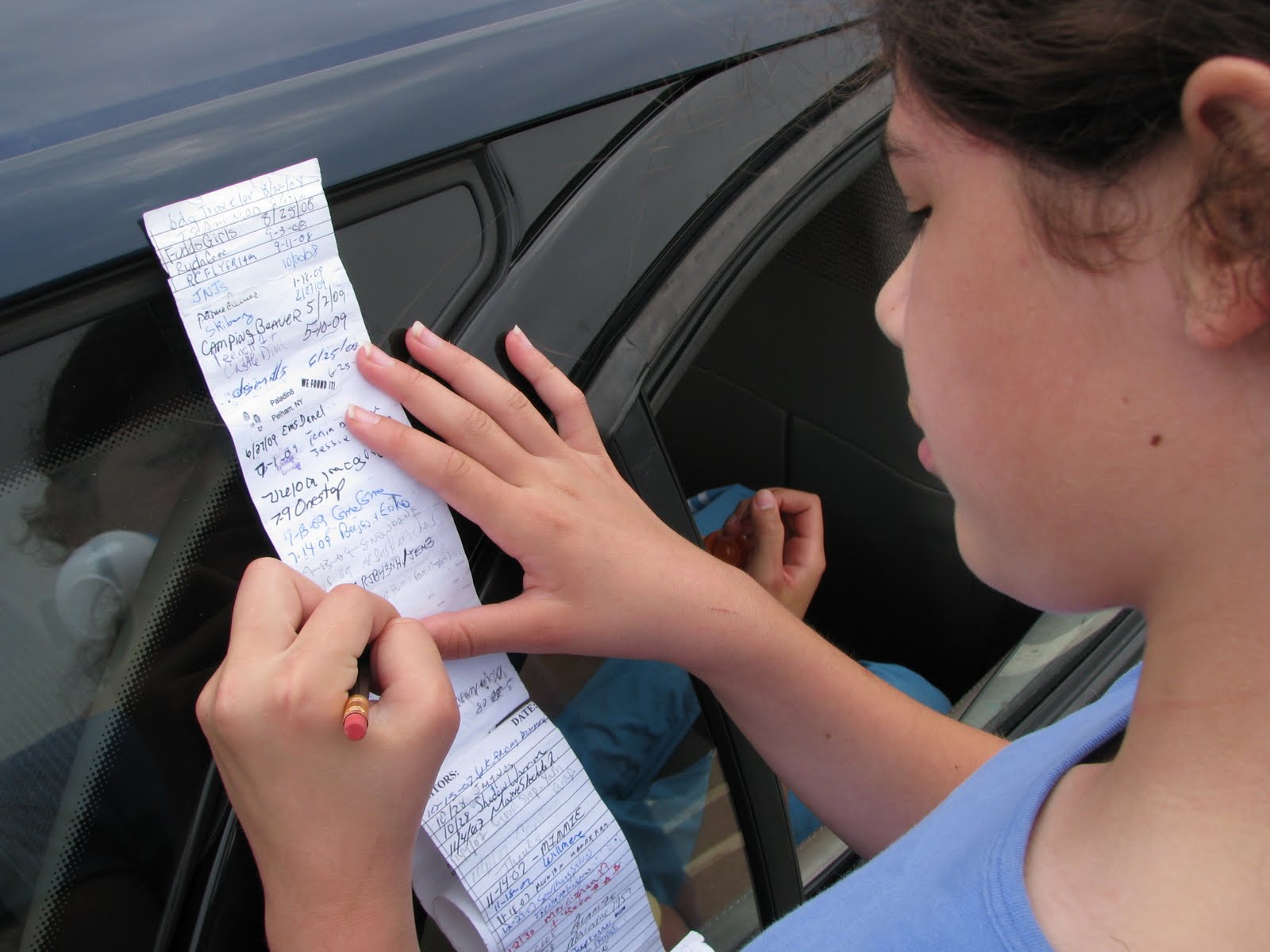
“I bet not everyone could find THAT one!” exclaimed my 13-year-old.
I’m always happy to hear evidence of growing self-esteem in my daughters. We set out to find the next geocache on our list, a mystery cache.
The mystery cache required we answer a series of questions and complete some addition and subtraction problems to determine the coordinates of the hidden cache. The questions involved driving around a specific area to locate dates on historic buildings and count columns on a meeting house and doors on a fire station. This was all easily handled by my 11-year-old in the back seat. After completing a couple of simple equations, we had the coordinates of the geocache inputted into our GPS.
This particular mystery cache, however, was hidden in a high traffic “muggle” area (i.e., a very public place with lots of non-geocachers around), so discretion was key. But trying not to be obvious when you’re searching for a geocache the size of your pinky finger is tricky. My daughter and I opted to sit down to think about the situation after our initial search turned up nothing. It was then that we thought more like a geocacher (tree stumps and stone walls are favorite hiding spots) and made the discovery within an arm’s length of where we were sitting.
“That one was tricky. But HA! We figured it out!” my 11-year-old exclaimed.
My family enjoys many aspects of this game, but for now we’re having a particularly good time with the mystery cache puzzles. We’re also learning to work as a team and developing some good, creative problem-solving skills. It’s also been a great way to spend time with my kids to help them each learn skills that will translate well into other aspects of their lives. Playing a game that builds self-esteem and encourages better communication with their parents during this (sometimes) challenging stage of child development is an extra special bonus.
Hey kids! Let’s get started
IF YOU’RE NEW to the game, the Almeida kids have some advice:
* Pick an easy geocache (1 or 2 difficulty rating) that has good hints on an easy trail. (The rating system on geocaching.com includes both geocache and terrain difficulty ratings.)
* Kids are better lookouts for geocaches and usually find them before their mom or dad, and it’s fun to show your parents you’re better at this game than they are.
* Look for logs or tree stumps that have splits in them, because geocaches are sometimes hidden inside. Also check piles of sticks or leaves that don’t look natural.
* Tell your kids to look for a green tint, because the geocache sticker might be showing if the cache isn’t completely covered.
* Geocaches are usually a short way off the trail. They are not usually right on trail because too many people who don’t play the game might find them.
* If you take something, you always have to put something else in its place so the geocache always has toys for the next kids who find it.
* Reading the logbook is fun to see who has found the box. It’s also fun to write your own family’s name in the book, too.
* When you are in a busy place and you have the geocache, act casual and discreet. Make it look like you’re not hiding it again so it doesn’t get found by a curious person who doesn’t know the rules of the game.
Know your caches
As geocaching has gained in popularity since its inception back in 2001, the game has become more creative, with a variety of ways to play.
* A MICRO CACHE is the size of an old 35-mm film canister or smaller and can be tucked just about anywhere. This makes them challenging to locate.
* A MULTI-CACHE involves more than one set of coordinates to find. Once the initial location is found, the geocacher gets a clue to the next location, and so on, until the final clue reveals the actual hidden “treasure” box. These caches can include both micro and traditional containers and have varying degrees of difficulty.
* A MYSTERY CACHE requires the solving of a puzzle, which is sometimes quite involved, in order to determine the coordinates to the location of the geocache. These types of caches offer some of the most difficult challenges in the game.
 * An EARTHCACHE is a place that has a special geoscience feature or aspect of our Earth. Coordinates to locate an EarthCache (the “treasure” is the location, no hidden boxes) also include educational information about why the geoscience feature is significant to the planet. The Geological Society of America is involved in the listing of EarthCache sites around the world and sponsors a “masters program” for goal-oriented EarthCachers.
Originally published in Raising Maine Magazine, September 2009
 Kidtracks